Buying for a children’s indoor play centre carries real risk. Get the structure, safety surfacing, or layout wrong and you face failed inspections, delayed openings and costly rework that erode your margin. Pitches all sound the same, and importers, distributors and private-label buyers often lack a practical benchmark for comparing suppliers. The fix is not a bigger brochure or a cheaper quote. It is understanding what the equipment must do, the checks that matter, and how a reliable supplier proves each one before you commit a single container.
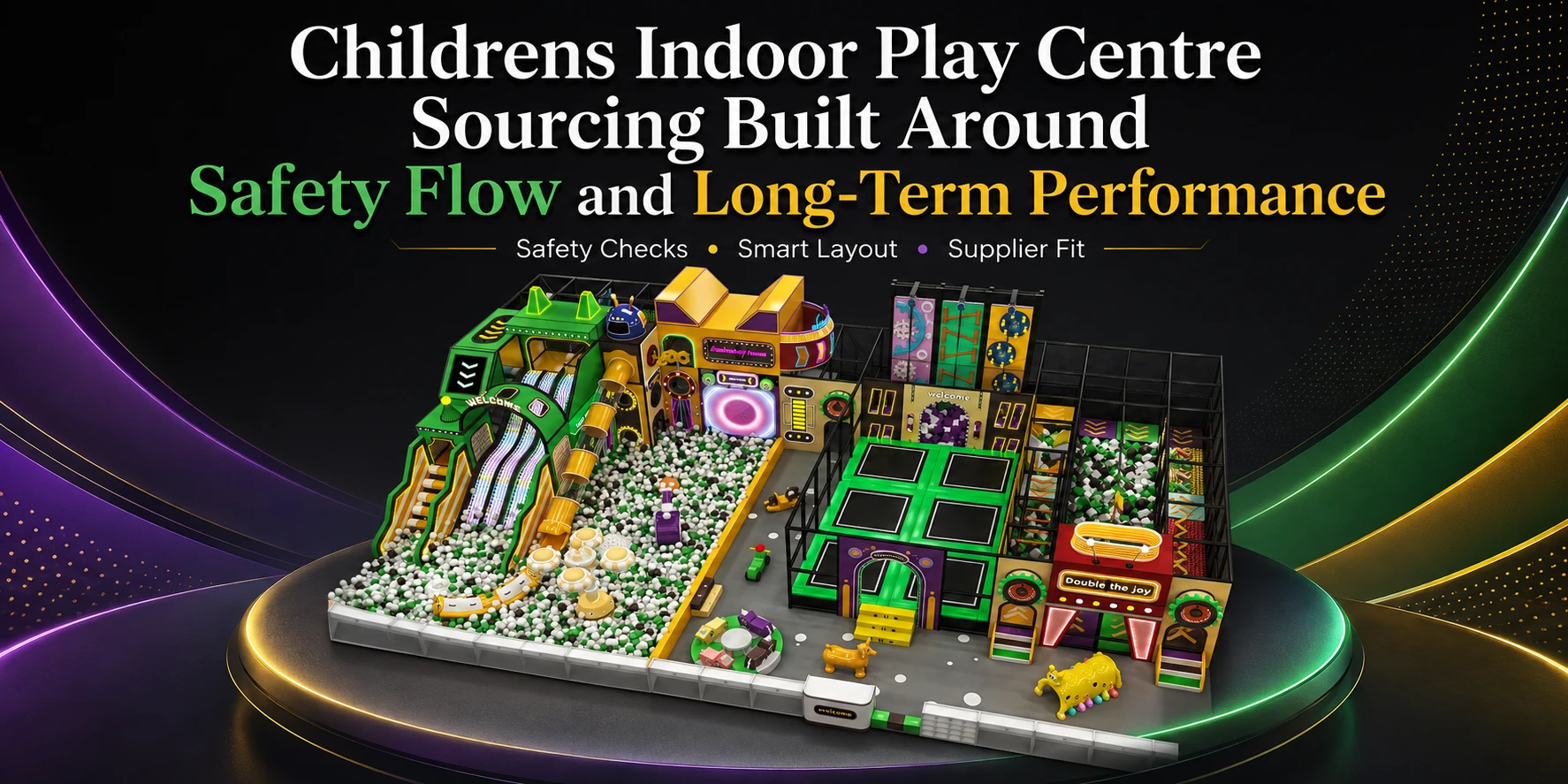
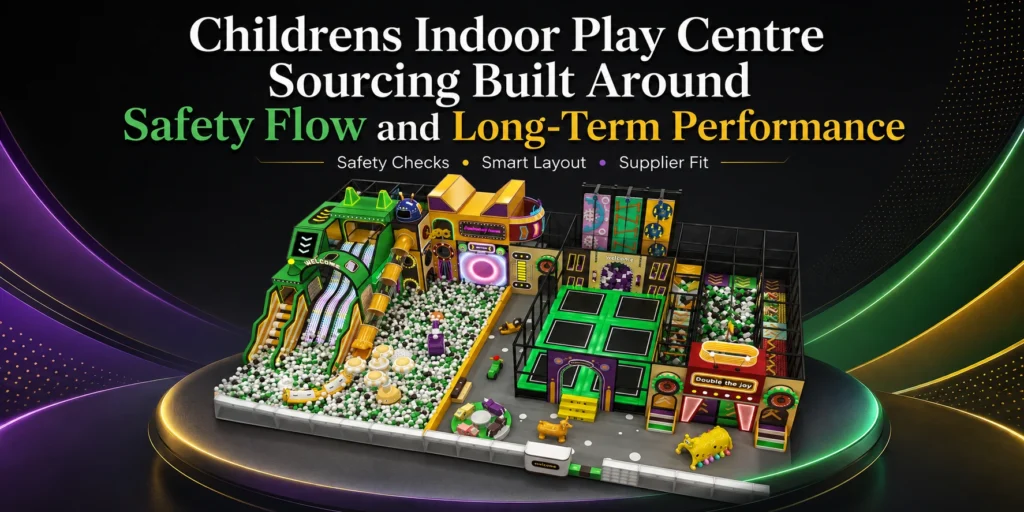
A children’s indoor play centre is a weather-independent venue fitted with climbing frames, slides, ball pools, soft-play blocks and obstacle structures designed for supervised children’s activity. Commercial versions usually divide space into age-specific zones, add party rooms or café seating, and follow documented safety, hygiene and fire-evacuation procedures. Equipment is specified by floor-plan size, height limits, expected daily visitor numbers and target age range. Buyers typically compare structural materials, foam density, anchoring methods and cleaning access before choosing a supplier. Those factors decide maintenance cost, compliance paperwork and how long the centre stays open.
Read on to see how a children’s indoor play centre works and which sourcing checks matter first.
How Childrens Indoor Play Centre Works
An indoor play centre runs on a simple operating loop: entry checks, supervised play, then scheduled cleaning. How that loop is assembled matters more than headline attractions.
- Reception staff log visitors, record waivers and enforce anti-slip sock rules.
- Children are split into age-separated zones — low soft play for under-3s, multi-level frames for older children.
- Staff manage sight lines while impact surfacing beneath each frame absorbs falls.
- Closing checklists flag worn padding, loose bolts and debris before reopening.
Role of each component in the play loop
Soft play blocks cushion first steps; frames deliver climbing challenge; netting confines each risk zone; edge covers protect the walkways around them.
Sourcing check: state each zone’s fall height, age range and expected child density before asking suppliers to quote. Those three inputs decide structure type, impact surface and anchor points.
Component choice decides whether that loop survives daily traffic — covered next.
Childrens Indoor Play Centre Components and Product Types
Replacement frequency lies in the components you compare, not the headline build price. Check the product types in the table below before sending an RFQ.
| Product type | What to compare |
|---|---|
| Soft play modules | Foam density, cover stitching, base size |
| Slides and run-outs | Entry height, landing depth, joint gaps |
| Climbing structures | Tube gauge, connector style, net rating |
| Ball pits | Ball count, liner material, depth guard |
Pin down these specification details:
- Material grade – foam density and wipe-clean cover finish decide repair frequency.
- Safety evidence – request fire-retardant and impact-test data plus capped fixings, in writing.
- Age grouping – toddler sections need gentler slopes, enclosed edges and shallower ball pits than junior zones.
- Future expansion – replacement panels, foam shapes and connectors must match the original range.
Your venue type and expected footfall shift the priority among these items; that application mapping follows.
Typical Applications for Childrens Indoor Play Centre
Your venue type sets the equipment mix, batch volume and compliance paperwork, so measure each application against the product categories above.
- Retail and shopping centre soft play — toddler zones with ball pools and low foam structures suit steady daily footfall. Specify wipe-clean covers and replaceable foam panels, because heavy sanitising shortens component life.
- Family entertainment centres and trampoline parks — multi-level frames, rope walks and tall slides demand modular steel or timber builds with clear access for daily visual inspection.
- Hospitality projects — hotel kids’ clubs run in compact rooms, so prefer relocatable units that reassemble without specialist tools.
- Education and community venues — nurseries order smaller mobile pieces, often in repeat batches of 5–20 units for multi-site rollouts.
For each scenario, request destination-market safety evidence (EN 1176, ASTM F1487 or AS 4685) plus a batch inspection plan before you commit.
That groundwork decides how bespoke layouts, private-label branding and OEM cooperation are structured.
Custom Childrens Indoor Play Centre Manufacturing and OEM Cooperation
Custom childrens indoor play centre manufacturing begins with your floor plan or theme references. The supplier converts those into an itemised quotation covering materials, safety surfacing and compliance documentation before tooling starts. From there, expect six repeatable stages:
| Stage | Buyer input | Manufacturer output |
|---|---|---|
| 1. Feasibility | Floor plan, age range, theme | Technical drawing and itemised quote |
| 2. Sample sign-off | Colour, fixings, edge finish | Pre-production sample or 3D model |
| 3. Pre-production | Logo artwork, packaging marks | Production schedule, material certificates |
| 4. Batch production | Mid-run inspection date | In-line dimensional and safety checks |
| 5. Packing | Playground shipping and packing marks | Export packing list with photos |
| 6. Handover | Chosen playground Incoterms | Loading inspection, shipping documents |
Inspection checklist
Confirm sample dimensions, fastener torque and foam density before release. That signed record becomes the benchmark for batch sampling, and it lets you judge every shortlisted supplier against the same six stages.
Top 10 Childrens Indoor Play Centre Manufacturers and Supplier Fit
Rankings differ by region and budget, so treat fit as the test, not a fixed top-ten list. These four supplier categories cover most sourcing routes.
| Supplier type | Pros | Cons | Best fit |
|---|---|---|---|
| Turnkey soft-play manufacturer | Certified design and install under one contract | High price; 20-week lead times common | Museums; family entertainment centres |
| Modular equipment importer | Lower unit cost; fast container delivery | Safety certification varies by batch | Multi-country playground projects |
| Bespoke timber/composite builder | Landmark structures that pull repeat visits | Long build lead; fragile transport | Destination centres needing a signature piece |
| OEM white-label factory | Your colours, logo and packaging on every batch | Sample sign-off and audits fall to you | Private-label buyers scaling repeat orders |
Score each candidate on:
- Age-range certification for every target country
- Sample turnaround under 14 days
- Auditable batch records and customs documents
Sourcing principle: a factory that avoids third-party inspection before shipment is a risk, whatever its marketing promises.
About JQ Playground – globalplaygroundsource.com
JQ Playground (Wenzhou Jiqi Amusement Equipment Co., Ltd.) is a children’s playground equipment manufacturer founded in 1993. The company provides design, customization, large-scale manufacturing, sales, installation guidance, and after-sales support for outdoor playgrounds, indoor playgrounds, soft play, water playgrounds, PE board playgrounds, kindergarten furniture, outdoor fitness equipment, pet playgrounds, and playground facilities. Approved company facts include 180+ employees, a large Wenzhou production base, 20+ production lines, 55 production machines, ISO/BSCI/EN1176/EN71/ASTM/CPC/CPSIC certification references, 100+ patents, free design support, OEM/ODM capability, trial installation before shipping, export experience, and one-year quality warranty.