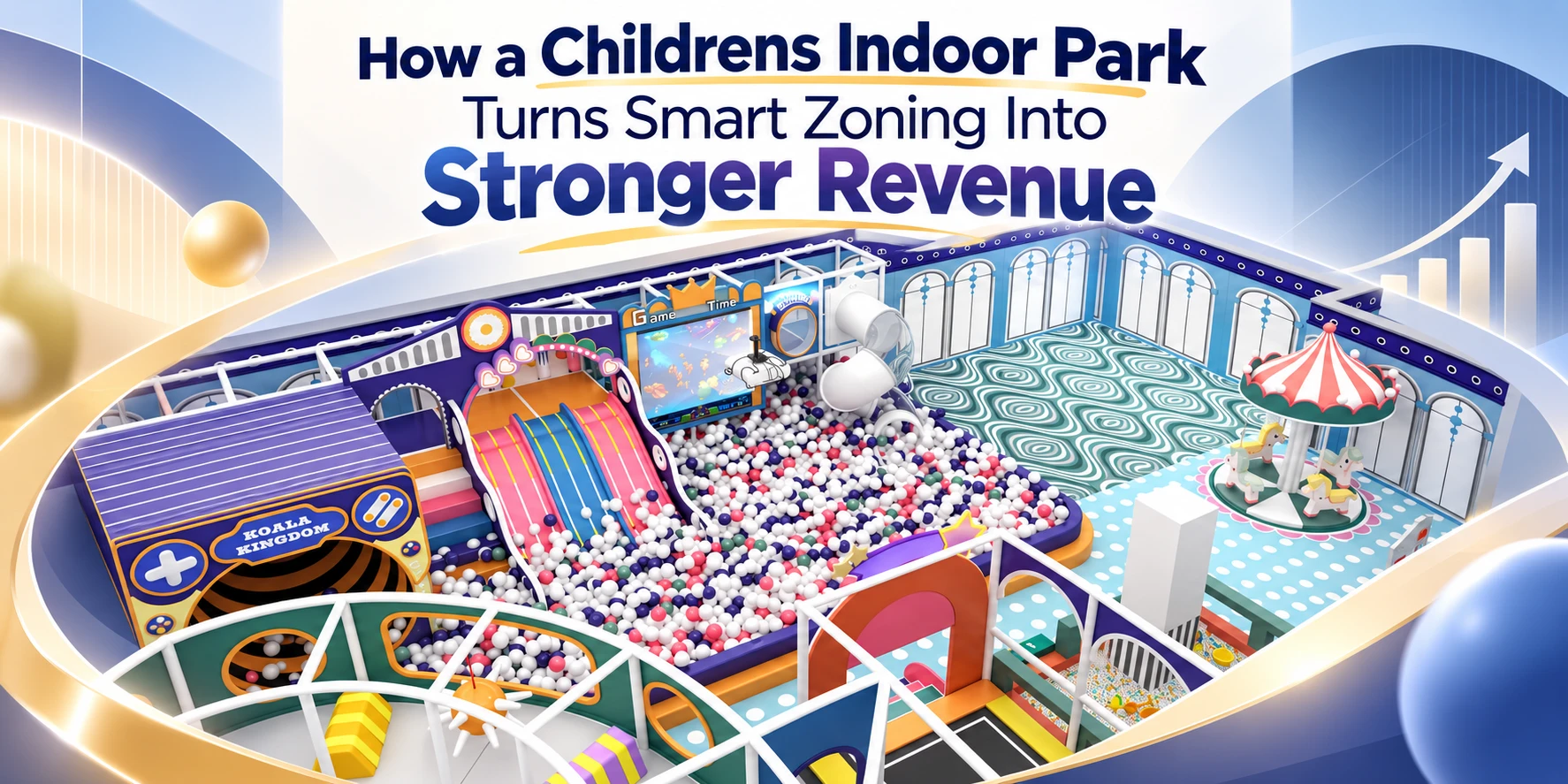
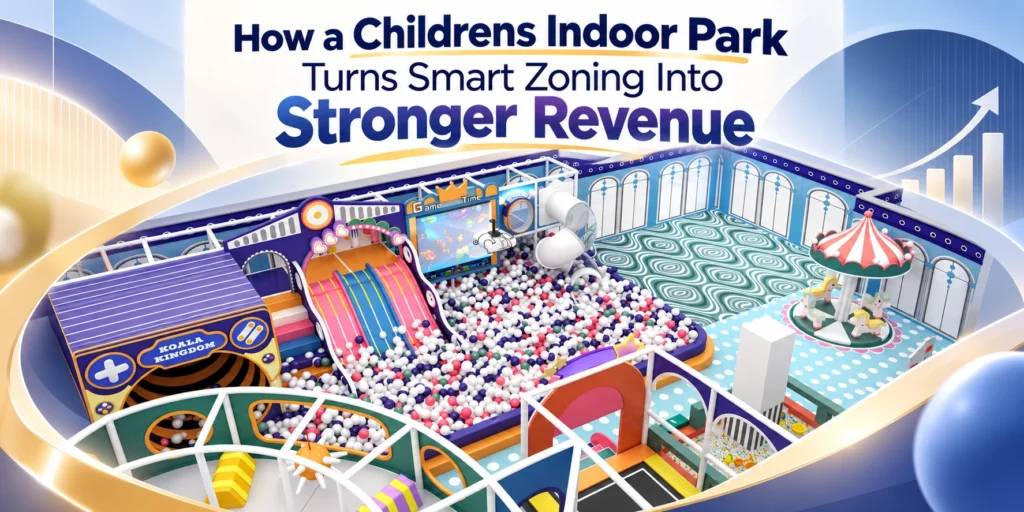
For childrens indoor park, buyers need guidance that matches the exact query intent before comparing suppliers, specifications, or RFQ details.
When an RFQ for a children’s indoor park lands on your desk, it rarely arrives as a clean equipment list. Instead, you get a venue name, a local market model, and a rough footprint, then must translate that brief into a standard package of play structures, party rooms, and entry or retail zones. Defined neutrally, a children’s indoor park is a commercial indoor space designed for play, parties, and drop-in admissions. The fastest way to understand what buyers expect is to study the venue pages that rank for this keyword.
Types of Children’s Indoor Park Venues That Determine Equipment Scope
Three venue models dominate children’s indoor park searches, and each lands differently in an international playground supplier’s RFQ inbox.
Castle-themed play centres. Magic Ground-type operators anchor the floor to one imposing themed structure. Expect RFQs for a castle-styled soft play centrepiece, themed cladding, and story-matching party rooms; stated capacity sits mid-range.
– Castle play frames, ball pools, slide towers, story-matched décor
Suburban play-and-party centres. HyperKidz-type venues treat birthday packages as core income, so RFQs pair safe, spacious open-floor play with partitioned party suites and a weekend-peak headcount.
– Open-floor frames, toddler zones, party suites, parent seating
Membership-based play galleries. Kids Play Gallery-style businesses run on daily passes, memberships, and field trips. RFQs centre on modular exhibits and toddler decks built for weekly repeat visits, not one show-piece.
– Soft play exhibits, sensory panels, toddler decks, exhibit storage
Ask which model your buyer runs before quoting; it sets your centrepiece-to-open-floor split, party-room ratio, and toddler-zone space.
Attraction Zones and Play Structures Used by Leading Children’s Indoor Parks
Venue attraction pages translate directly into quoted product categories. Magic Ground promotes castle-themed towers and learning-focused play; HyperKidz positions safe, spacious indoor adventure. Expect these recurring zones:
- Multi-level play structures — quote by floor footprint, deck height, and route density.
- Slides and climbing elements — cost by slide type, drop height, and fall-surfacing depth.
- Ball pits — price by floor area and ball count; spec hygiene-grade balls.
- Soft play blocks — aimed at ages 1–4; quote per set with safety matting.
- Toddler play decks — lower clearance with separated sightlines for supervising adults.
- Themed or interactive attractions — castle, circus, or educational panels that raise dwell time.
Quote each zone on play value, height clearance, safety surfacing, and age split, so buyers compare suitability rather than floor area alone.
Party Rooms and Event Spaces as the Revenue Backbone of a Children’s Indoor Park
Party hire income often outpaces admission revenue, so every leading venue promotes on-site celebration packages. HyperKidz sells Super, Mega, Colossal, and Royal tiers; Magic Ground pushes castle birthday offers; Kids Play Gallery lets families scale from small to private party bookings.
For contractors, the party floor plan is a distinct fit-out, not an afterthought. Quote dedicated rooms with acoustic partitions or themed walls, buffet and cake counters, adult seating near the door, and a host paging or light system. Add a clean-up store and trolley bay so room turnaround takes minutes, not hours.
Semi-private spaces suit venues under 500 m²; full-rental event halls fit operators chasing weekday school and corporate bookings. Price party-room fit-outs per square metre, separate from the open play floor, so buyers see the margin case.
Admission, Membership, and Drop-off Operations That Reshape Indoor Park Floor Plans
Admission policies decide how much of your quoted floor area earns money before play begins. Venues ranking for this keyword fall into two operational models: timed drop-off sessions and continuous daily-pass or membership entry. Each changes the entry module you design.
- Front desk and ticketing: quote 2 m of counter per till, and keep waiver scanning separate from payment screens, or queues double at party arrival times.
- Secure parent-child entry gates: specify a two-lane set when peak sessions reach 60 children per hour; a single gate creates a pinch point by the desk.
- Stroller parking: count 1.5 m² per pram and position racks beside the entry so parents can park without blocking the drop-off wait line.
- Cubbies and lockers: size these to peak membership levels, not average daily visits. Members arrive with coats and bags on repeat trips.
- Wristband distribution: place the station after the gate, away from the till, so day-pass guests never queue back through ticket sales.
Drop-off supervision adds a separate waiting bay where staff can watch children during check-in. Keep it visible from the desk and separated from walk-in traffic. Ask buyers for their member-to-day-pass ratio before quoting; a 70/30 split demands faster gate scanning and more cubby capacity, while a day-pass-heavy model needs deeper queueing space plus an extra attendant at afternoon peaks.
About JQ Playground – globalplaygroundsource.com
JQ Playground (Wenzhou Jiqi Amusement Equipment Co., Ltd.) is a children’s playground equipment manufacturer founded in 1993. The company provides design, customization, large-scale manufacturing, sales, installation guidance, and after-sales support for outdoor playgrounds, indoor playgrounds, soft play, water playgrounds, PE board playgrounds, kindergarten furniture, outdoor fitness equipment, pet playgrounds, and playground facilities. Approved company facts include 180+ employees, a large Wenzhou production base, 20+ production lines, 55 production machines, ISO/BSCI/EN1176/EN71/ASTM/CPC/CPSIC certification references, 100+ patents, free design support, OEM/ODM capability, trial installation before shipping, export experience, and one-year quality warranty.