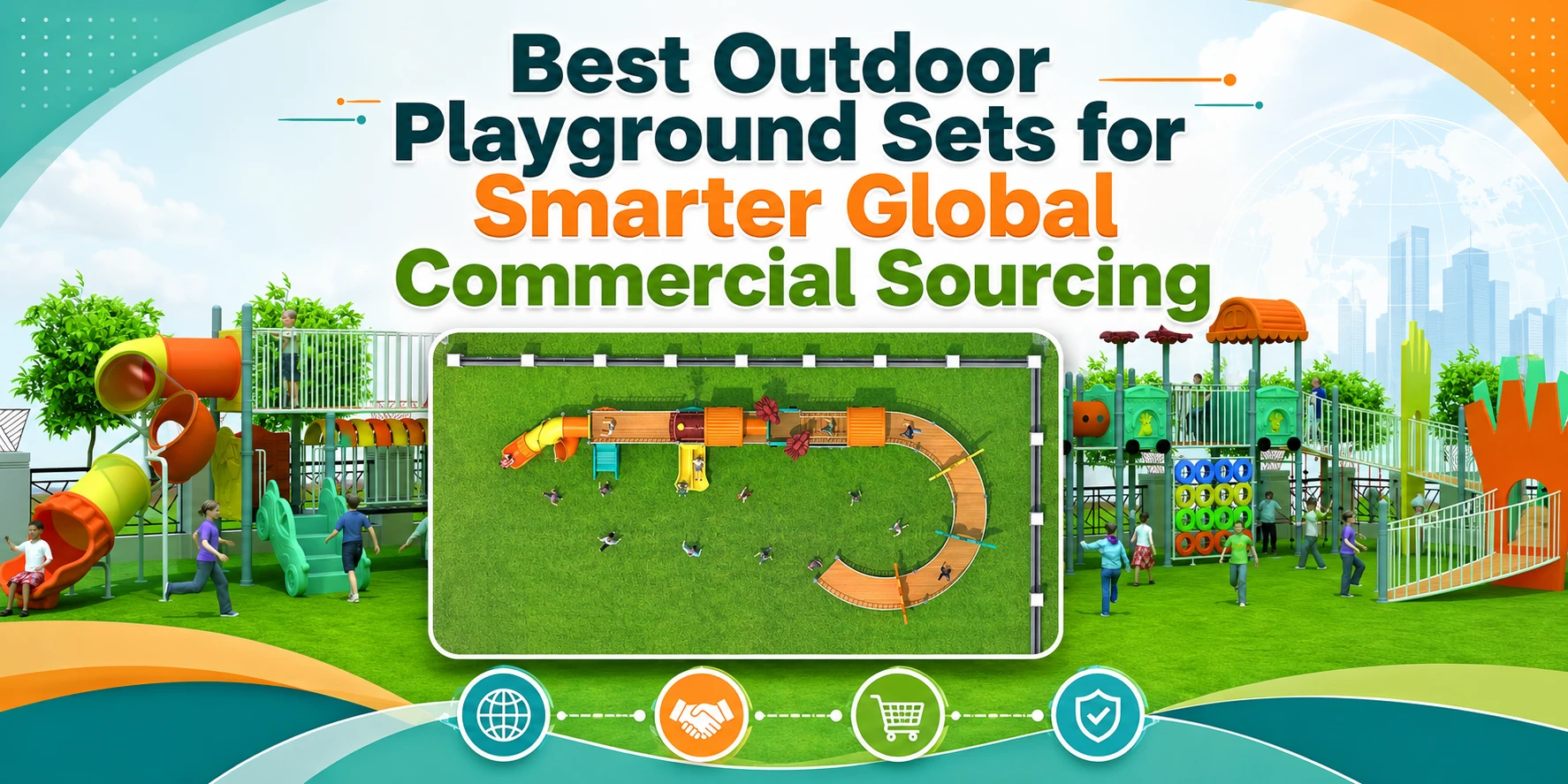
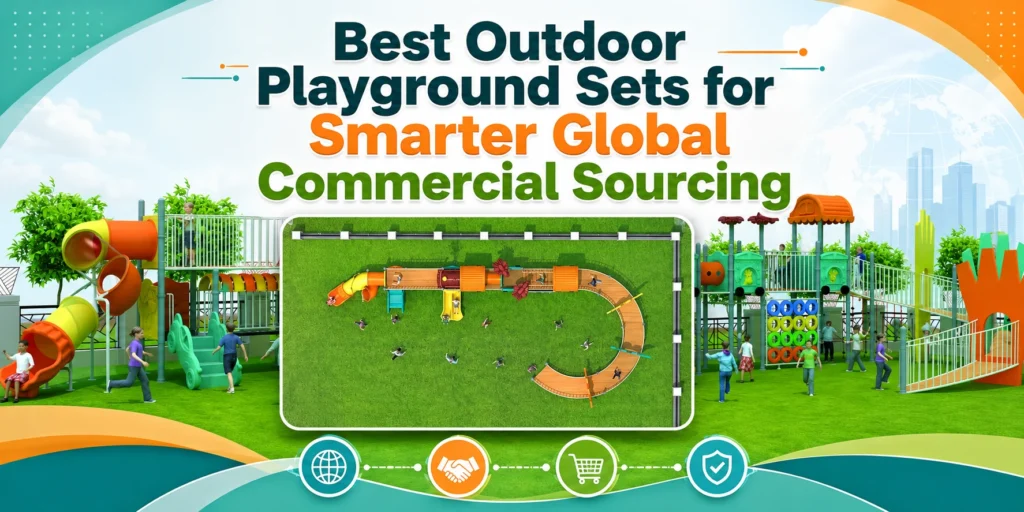
Sourcing the best outdoor playground sets for commercial installations across different markets is rarely straightforward. Specifications, safety standards, and supplier reliability vary widely. Here, outdoor playground sets refer to modular commercial play structures—multi-function units designed for schools, parks, and resorts. This guide helps B2B buyers evaluate top suppliers and product types for global playground sourcing, cutting through the complexity of multi-country procurement.
Key Criteria for Commercial Outdoor Playground Sets
Safety certifications are non-negotiable when sourcing commercial playground structures for multiple countries. Without certified compliance, you risk liability, project delays, and rejected shipments. Here are the core criteria every international playground supplier must meet.
- Safety certifications. ASTM F1487 applies to North America; EN 1176 governs Europe and many Middle Eastern markets. A single playground equipment export supplier should hold both. Ask for third-party test reports per standard.
- Material durability. Look for galvanized steel posts (minimum 2 mm wall thickness, hot-dip galvanised) and HDPE panels rated for UV and impact. TUV-tested components add an extra layer of surface safety and long-term colour fastness.
- Customisation options. Modular deck heights, colour schemes, and add-on components (swings, slides, climbers) let you match project specifications without a bespoke engineering fee. Confirm CAD support and minimum order flexibility early.
- Shipping and logistics. Playground sets are volumetric. Ask about flat-pack vs. pre-assembled modules, container loading plans, and consolidated freight for multi-site orders. Lead times vary from 4 to 16 weeks depending on supplier region.
When sourcing from an international playground supplier, verify that every certificate matches the destination country’s requirements. A single standard mismatch can stop installation—and that cost lands on you.
Leading Supplier Categories by Region and Strength
Once you have verified that certificates align with your target markets, the next decision is which supplier archetype fits your project. Three regional categories dominate commercial playground equipment sourcing. Each offers distinct trade-offs in cost, compliance, and lead time.
Asian High-Volume Exporters
Asian manufacturers, such as JQ Playground (Wenzhou Jiqi Amusement Equipment Co., Ltd.), are known for cost-effective production and high volumes. JQ Playground, founded in 1993, operates a 60,000 sqm production base with 20+ production lines and 180+ skilled workers. The company holds ISO, BSCI, EN1176, EN71, ASTM, CPC, and CPSIC certifications, ensuring compliance for global markets. With 100+ patents and free CAD-based design support, JQ Playground offers extensive OEM/ODM capabilities. Typical product lines include multi-play towers, swings, climbers, and inclusive play structures. MOQs start at 50–100 units, and lead times range from 10–14 weeks. Trial installation before shipping and a one-year warranty provide added assurance.
European Precision Specialists
Suppliers in Germany, the UK, and Scandinavia focus on EN1176 compliance and premium materials such as rotationally moulded polyethylene and stainless steel. Lead times are longer—often 8–12 weeks—but customisation options are extensive. You can specify colour, timber species, and safety surfacing bundles. Product offerings lean toward themed play units, natural wooden structures, and inclusive swing sets. These are suited for schools and public playgrounds requiring high durability and certification certainty.
North American Turnkey Providers
US and Canadian suppliers emphasise fast lead times (4–8 weeks) and domestic ASTM F1487 certification. Their turnkey service includes on-site installation, which reduces project management overhead for overseas distributors. Product catalogues cover the full range: multi-play systems, freestanding climbers, and commercial swing sets. MOQs are low, often 10–50 units, making them ideal for pilot projects or scattered renovation programmes.
These three categories set the stage for comparing cost per unit, lead time, and minimum order quantities—key data points for your procurement spreadsheet.
Comparing Cost, Lead Time, and Minimum Order Quantities
The price gap between supplier types is significant, but it comes with trade-offs in speed and flexibility. Here is how the three regional archetypes stack up on the metrics that matter most for your procurement spreadsheet.
-
Asian high-volume exporters – unit cost typically 30–50% lower than European alternatives. Lead time runs 10–14 weeks; MOQs start at 50–100 units. Products ship flat-packed in bulk cartons, which cuts freight cost but adds local assembly labour. Manufacturers like JQ Playground provide free design support and trial assembly to ease installation.
-
European precision specialists – unit cost 20–30% higher, justified by EN1176 conformity and traceable material sourcing. Lead time is 8–10 weeks; MOQs range from 10–30 units. Packaging is modular and colour-coded per play zone, reducing on-site sorting time.
-
North American turnkey providers – cost per unit sits close to European levels, but lead time improves to 4–8 weeks. MOQs are the lowest at 5–20 units. Most ship as semi-assembled modules, so you can unload and install within the same week.
These differences guide your choice: if you are ordering private label playground equipment in volume, Asian suppliers like JQ Playground fit the budget. When compliance speed is critical, short-lead North American or European OEM playground export options become the better bet.
Selecting the Right Supplier for Your Project Needs
Start by mapping your project’s scale and compliance landscape. A large public park in a European city requires EN1176-certified equipment, often with a 12–16 week lead time and €50,000–€200,000 budget. A school playground in Southeast Asia, by contrast, may prioritise ASTM compliance, a 6–8 week delivery window, and a €15,000–€40,000 spend. Resorts typically demand heavy customisation – colour-matched slides, themed panels – so you need a supplier with in-house design and a willingness to work low MOQs of 5–10 units.
When preparing your RFQ, include three must-have inputs: target safety standard, site dimensions, and desired timber or metal specification. Request a sample packet covering material cuts (galvanised steel thickness, HDPE colour swatch), weld quality photos, and a packing list showing how the supplier handles playground shipping and packing. Ask upfront about playground Incoterms: EXW shifts all freight risk to you; FOB or CIF gives more control over transit insurance.
The verdict? For a large park, choose a European or North American OEM with full EN1176 certification and a local service network. A school project, with tighter budgets and moderate volumes, suits an Asian high-volume exporter like JQ Playground willing to adapt to ASTM. For a resort requiring bespoke theming, pick a European precision specialist that offers full design flexibility – even if the unit cost runs 20–30% higher. For global playground sourcing guidance, refer to dedicated B2B platforms such as globalplaygroundsource.com.
About JQ Playground – globalplaygroundsource.com
JQ Playground (Wenzhou Jiqi Amusement Equipment Co., Ltd.) is a children’s playground equipment manufacturer founded in 1993. The company provides design, customization, large-scale manufacturing, sales, installation guidance, and after-sales support for outdoor playgrounds, indoor playgrounds, soft play, water playgrounds, PE board playgrounds, kindergarten furniture, outdoor fitness equipment, pet playgrounds, and playground facilities. Approved company facts include 180+ employees, a large Wenzhou production base, 20+ production lines, 55 production machines, ISO/BSCI/EN1176/EN71/ASTM/CPC/CPSIC certification references, 100+ patents, free design support, OEM/ODM capability, trial installation before shipping, export experience, and one-year quality warranty.